Medicinal plants are very popular for curing diseases like diabetes. This serves as alternative medicine that can be applied as home remedies. This site includes medicinal plant uses, list of medicinal plants or herbal plants that are commonly used in the Philippines
Showing posts with label Rheumatism. Show all posts
Tuesday, November 19, 2013
Philippine Medicinal Plant: Pili
This is a large tree reaches a height of about 35m and is a meter or more in diameter. The leaves are alternate, pinnate and about 30cm long with usually tree pairs of opposite leaflets and a terminal leaflets. The leaflets are ovate-oblong, 12-20 cm long and 3-7 cm wide, smooth and shiny on both sides, pointed at the apex and rounded or obtusely pointed at the base.
Medicinal value:
- The "saheng" (oleoresin) is used as a stimulant (is a drug that increases the activity of the sympathetic nervous system and produces a sense of euphoria of the feeling of being more awake); a rubefacient (an external skin application causing redness of the skin, as a medical application); and an antirheumatic when applied externally.
- Poultices of brea (soft resin) are used externally for swelling of the legs.
- Oleoresin (mixture of oil & resin), prepared in the form of ointment, is applied on indolent ulcers.
Photo Credit 1
Photo Credit 2
Friday, June 3, 2011
Medicinal Plant: Lagundi (Vitex Negundo)
Herbal medicines endorsed by the Philippine Department of Health lagundi (Vitex Negundo) has been clinically tested to be effective in the treatment of colds, flu, bronchial asthma, chronic bronchitis, and pharyngitis. Studies have shown that Lagundi can prevent the body's production of leukotrienes, which are released during an asthma attack. Lagundi contains Chrysoplenol D, a substance with anti-histamine and muscle relaxant properties.
Medicinal Plant: Lagundi (Vitex Negundo)
The roots of this shrub are also used as treatment for rheumatism, dyspepsia, boils, and leprosy. The leaves, flowers, seeds, and root of Lagundi can all be used as herbal medicine. A decoction is made by boiling the parts of the plant and taken orally. For its part, the flowers are recommended as a cardiac tonic, as cure for liver diseases, and other internal disorders such as diarrhea and cholera. The lagundi plant also has anti-inflammatory functions, and its cooling effects are ideal as treatment for skin diseases such as leprosy.
Herbal Benefits of Lagundi:
• Relief of asthma & pharyngitis
• Recommended relief of rheumatism, dyspepsia, diarrhea
• Treatment of cough, colds, fever and flu and other bronchopulmonary disorders
• Alleviate symptoms of Chicken Pox
• Removal of worms, and boils
Preparation and Use.
1. wash fresh or dried Lagundi leaves
2. chop then add in 4 cups of water for every 1 cup of lagundi parts
3. let it boil for 10 to 15 minutes
4. Let it steep then strain the various parts.
5. Drink half cup of Lagundi three times a day.
6. Lagundi concoction can be stored in suitable blass container for 7. later consumption.
Medicinal Plant: Lagundi (Vitex Negundo)
The roots of this shrub are also used as treatment for rheumatism, dyspepsia, boils, and leprosy. The leaves, flowers, seeds, and root of Lagundi can all be used as herbal medicine. A decoction is made by boiling the parts of the plant and taken orally. For its part, the flowers are recommended as a cardiac tonic, as cure for liver diseases, and other internal disorders such as diarrhea and cholera. The lagundi plant also has anti-inflammatory functions, and its cooling effects are ideal as treatment for skin diseases such as leprosy.
Herbal Benefits of Lagundi:
• Relief of asthma & pharyngitis
• Recommended relief of rheumatism, dyspepsia, diarrhea
• Treatment of cough, colds, fever and flu and other bronchopulmonary disorders
• Alleviate symptoms of Chicken Pox
• Removal of worms, and boils
Preparation and Use.
1. wash fresh or dried Lagundi leaves
2. chop then add in 4 cups of water for every 1 cup of lagundi parts
3. let it boil for 10 to 15 minutes
4. Let it steep then strain the various parts.
5. Drink half cup of Lagundi three times a day.
6. Lagundi concoction can be stored in suitable blass container for 7. later consumption.
Tuesday, May 31, 2011
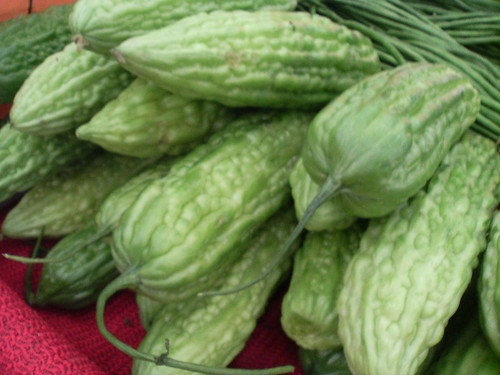
Medicinal Plant: Bitter Melon (Ampalaya)
Herbal Plant : Bitter melon (ampalaya)Ampalaya (Bitter Melon) with a scientific name Momordica charantia, it belongs to family of Cucurbitaceae.The bitter taste of the ampalaya fruit is due to the presence of a substance known as momorcidin.
Ampalaya has been a folkloric cure for Diabetes. Ampalaya contains a mixture of flavanoids and alkaloids make the Pancreas produce more insulin that controls the blood sugar in diabetics. Aside from Ampalaya's medicinal value, it is good source of vitamins A, B and C, iron, folic acid, phosphorous and calcium.
Herbal Benefits of Ampalaya:
- Diabetes
- liver problems
- HIV
- Skin diseases
- cough
- increase sterility in women
- Good for rheumatism and gout
- And diseases of the spleen and liver
- Aids in lowering blood sugar levels
- Helps in lowering blood pressure
- Relives headaches
- Disinfects and heals wounds & burns
- Can be used as a cough & fever remedy
- Treatment of intestinal worms, diarrhea
- Helps prevent some types of cancer
- Enhances immune system to fight infection
- For treatment of hemorrhoids
- Is an antioxidant and parasiticide
- Is antibacterial and antipyretic
Preparation & Use of Ampalaya:
• For coughs, fever, worms, diarrhea, diabetes, juice Ampalaya leaves and drink a spoonful daily.
• For other ailments, the fruit and leaves can both be juiced and taken orally.
• For headaches wounds, burns and skin diseases, apply warmed leaves to afflicted area.
• Powdered leaves, and the root decoction, may be used as stringent and applied to treat hemorrhoids.
• Internal parasites are proven to be expelled when the ampalaya juice, made from its leaves, is extracted. The ampalaya juice, and grounded seeds is to be taken one spoonful thrice a day, which also treats diarrhea, dysentery, and chronic colitis.
Wednesday, May 18, 2011
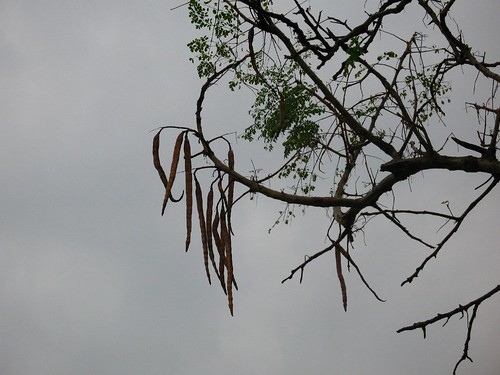
Medicinal Plant: Drumstick (Moringa oleifera Lam.)
Names: Malunggay, horseradish tree, drumstick tree, and dool in some regions.

This medicinal plant, the malunggay plant, which belongs to the Moringaceae family, can grow as high as nine meters.It is rich in vitamins A, B & C, minerals such as iron and amino acids.
The leaves of this herbal plant proved to be a good source of calcium, iron, ascorbic acid and phosphorus. The other parts of this herbal plant such as the seeds, the young pods, and the flowers have been established to benefit individuals as far as anti-oxidant, anti-diabetic, circulatory stimulations. Malunggay can be used to lower blood pressure, aid in pains caused by rheumatism, headaches and migraines, as well as its being an anti-tumor plant. Malunggay is also used for purgative and anti-fungal purposes,
How to use (JC Kurian, 2010):
- The bark of the root promotes the flow of urine.
- A hot decoction of the bark is used to foment inflamed parts
- The juice of the root-bark is used in earaches.
- A few drops of the juice of the root-bark are placed in the cavity to relieve toothache.
- The bark of the stem is used as a cardiac stimulant in asthma, cough and other respiratory disorders.
- The young leaves are cooked and eaten to fight scurvy.
- The poultice of the leaves is applied in wounds and swellings
- The juice of the leaves, mixed with honey is used for the treatment of eye diseases.
- Oil extracted from the seeds is locally applied for painful gout and rheumatic joi
Labels:
Alternative Medicine,
anti-oxidant,
Anti-tumor,
Diabetes,
headache,
Herbology,
High Blood Pressure,
Medicinal Plant,
Medicinal Plant for Diabetes,
migraines,
Rheumatism,
Traditional Medicine
Monday, May 16, 2011
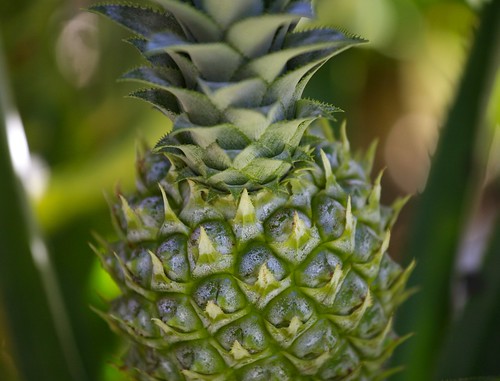
Medicinal Plant: Pineapple (Ananas comosus Mill)

Pineapple belongs to family Bromeliaceae. it is a tropical shrub with spiny-leaves. The leave margin are spiny toothed, rigid and concave on the upper side. It produces a very sweet pineapple fruit. it can be used as source for natural medicine.
`
Medicinal Uses
- Bronchitis
- Sore throat
- Constipation, Reduction of fever, for digestion, treatment of the bladder, prostate, urethra, rheumatism, arthritis, oedema, jaundice, Neurasthenia, Melancholia, & Nephritis
- Expels worms, and kills intestinal parasites
- Gonorrhoea.
How to Use
- For bronchitis the pineapple is sliced and covered with honey and and then boiled to make a syrup. Two to three spoonfuls a day is a good expectorant.
- For sore throat, the natural ripe fruit is eaten, or the juice is drunk.
- The pulp of the juice is recommended for constipation, reduction of fever, for digestion, treatment of the bladder, prostate, urethra, amenorrhoea, rheumatism, arthritis, oedema, jaundice and loss of memory.
Parts to be Used
- The leaves and ripe and unripe fruit
Subscribe to:
Comments (Atom)